Your Ultimate Guide to Modular Kitchens
Discover various layouts, ergonomic tips, and essential components with this modular kitchen guide to design your personalized cooking space.
Types of Kitchen Layouts
Modular kitchen configurations that seamlessly blend practical needs with personal taste.
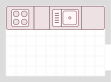
Straight Kitchen
This kitchen layout runs along one wall, making it a perfect choice for studio apartments, condos, or small-sized homes.
L-Shape Kitchen
This classic, two-sided kitchen design layout is one of the most versatile & flexible configurations suiting every style
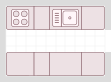
Parallel Kitchen
This layout has linear simplicity & a timeless appeal. It offers storage & counter space against two walls
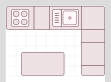
Island Kitchen
This layout is extremely convenient, providing additional worktops and seating, while creating an aesthetically pleasing
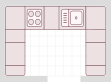
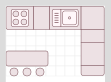
U Shaped Kitchen
This layout has three-sided wall designs that maximise storage possibilities & are efficient for medium & spacious kitchens.
Peninsula Kitchen
This layout has 3 accessible sides with one end attached to a wall, & serves as an alternative option to for smaller kitchens.
Comparison Between Modular, Semi-Modular and Custom
Structure
Finishes
Ease of Design
Installation
Space Optimisation
Warranty
Cost Value
Maintenance
Time Duration
Custom Carpentry
Civil kitchens are constructed by carpenters with elementary technology and design.
The aesthetic quality depends on the workmanship of the carpenter.
Constraints on tailor-made design and planning with 2D visuals
Due to the fixed components, the assembling and dismantling are arduous.
Constructed with no standard modules, space constraints and simple storage solutions.
No guarantee and replacements possible
The cost may vary to the original estimate.
The fixed cabinets and shelves make deep cleaning around the edges and corners a hassle.
The components fabricated on site make it a time-consuming and arduous task.
Semi Modular
Semi-modular kitchens comprise existing civil work constructions along with modular units.
Finish and quality are a concern since they depend on the vendors and carpenters.
It provides a limited scope of customisation and precise detailing.
The fixed cabinets in these kitchens cannot be disassembled.
Unlike fully-modular kitchens, space utilisations could be questionable because of the existing platforms.
No guarantee and replacements possible
Comparatively cheaper than full-modular kitchens
Cleaning and maintenance of the existing structures is slightly tough.
The modular fittings take longer than usual, depending on the efficiency of the carpenters.
Full Modular
Modular kitchens are assembled in factories in the form of multiple units that assimilate aesthetics and functionality;
Sleek and seamless look with premium quality.
Designed by experts with the latest technology and 3D visuals, these kitchens ensure utility and are personalised per the user’s style.
The pre-fabricated modular units can be assembled and dismantled easily.
Standard Modular units provide designated space for customised storage solutions, enhancing ergonomics and functionality.
11-year warranty and convenient replacements of components
Designed according to the budget with marginal cost difference
Detachable modular units are easy to clean and maintain.
Factory-made modular units ensure timely delivery and hassle-free execution.
Core Material Used In Modular Kitchen
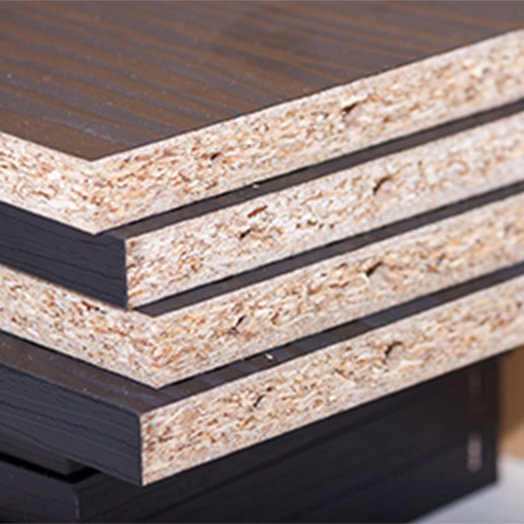
Particle Board
Particle board is made by compressing wood chips or jute fragments, resulting in a flexible and smooth-textured material. Known for being both strong and budget-friendly, particle boards are also a popular eco-conscious choice in interior applications.
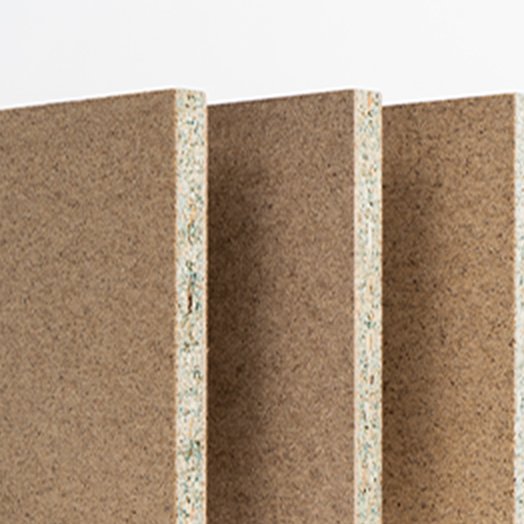
MDF
Medium Density Fibreboard (MDF) is made by breaking down hardwood and softwood composites. Known for being a cost-effective option, MDF features a smooth surface that allows for intricate and attractive carvings. It is a dense and sturdy engineered wood product.
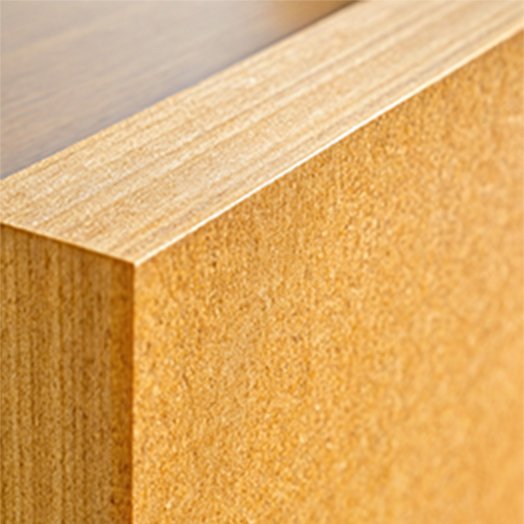
HDF
High Density Fibreboard (HDF) is one of the most budget-friendly materials, recognized for its durability and moisture resistance. Its strong and sturdy composition offers a smooth, modern finish, making it an excellent choice for stylish interior designs.
HDHMR
High-Density High Moisture Resistance or HDHMR plywood is developed with a homogenous construction process. This wardrobe material is tougher than plywood, extremely water-resistant, uniform, and cost-effective.
BWR Plywood
BWR (Boiling Water Resistant) Plywood is crafted using phenolic resins, giving it waterproof properties. Commonly used in residential and office furniture, this wardrobe material is eco-friendly, durable, pest-resistant, budget-friendly, and built to last.

BWP Plywood
BWP plywood is among the finest materials for wardrobes, offering exceptional water resistance and the ability to endure varying weather conditions. It guarantees superior longevity, strength, flexibility, and durability.
MR Plywood
Moisture Resistant Plywood, commonly referred to as commercial plywood, is known for its excellent internal strength. Its high internal density makes it sturdy and resistant to bending. This top-quality material enhances interior durability and ensures long-lasting performance.
Modular Kitchen Material Comparison
Composition
Aesthetics
Strength
Affordability
Resistance
Customisation
Particle Board
Particle board is formed from compressed wood chips, sawdust particles and
resins together.
Low-quality and
appearance
Fragile and cannot withstan heavy loads
Cheapest among
all.
Exposed to moisture
damage
Suitable for readymade
furniture
MDF
Medium-Density-Fibreboard fabricated from wood fibres
and resins.
Smooth
finish
Highly
durable
More economical than plywood and HDF
Less susceptible to damages
Easy to cut in varied designs and styles
Plywood
The engineered material is made of thin layers of wood veneer
glued together.
Solid wood appearance and attractive look
Enduring and sturdy than MDF and Particleboard
Expensive yet
valuable.
More resistance to moisture damage and scratches
Rigid in
Design
HDHMR
HDHMR is uniquely crafted using the latest technology by compressing wood fibres and forest wood waste under high pressure.
Expensive yet
versatile and durable
Highly dense
and more resilient
than any other material
Boasts smooth
and glossy finish
High-moisture resistance,
effectively used for kitchen interiors.
Hard-wearing and
difficult-to-craft complex shapes
Subscribe to Our Newsletter for Design Insights
Be the first to discover trends, inspirations, and special offers as we bring the world of design directly to your inbox
Decvilla your premier destination for luxury and modern interior design